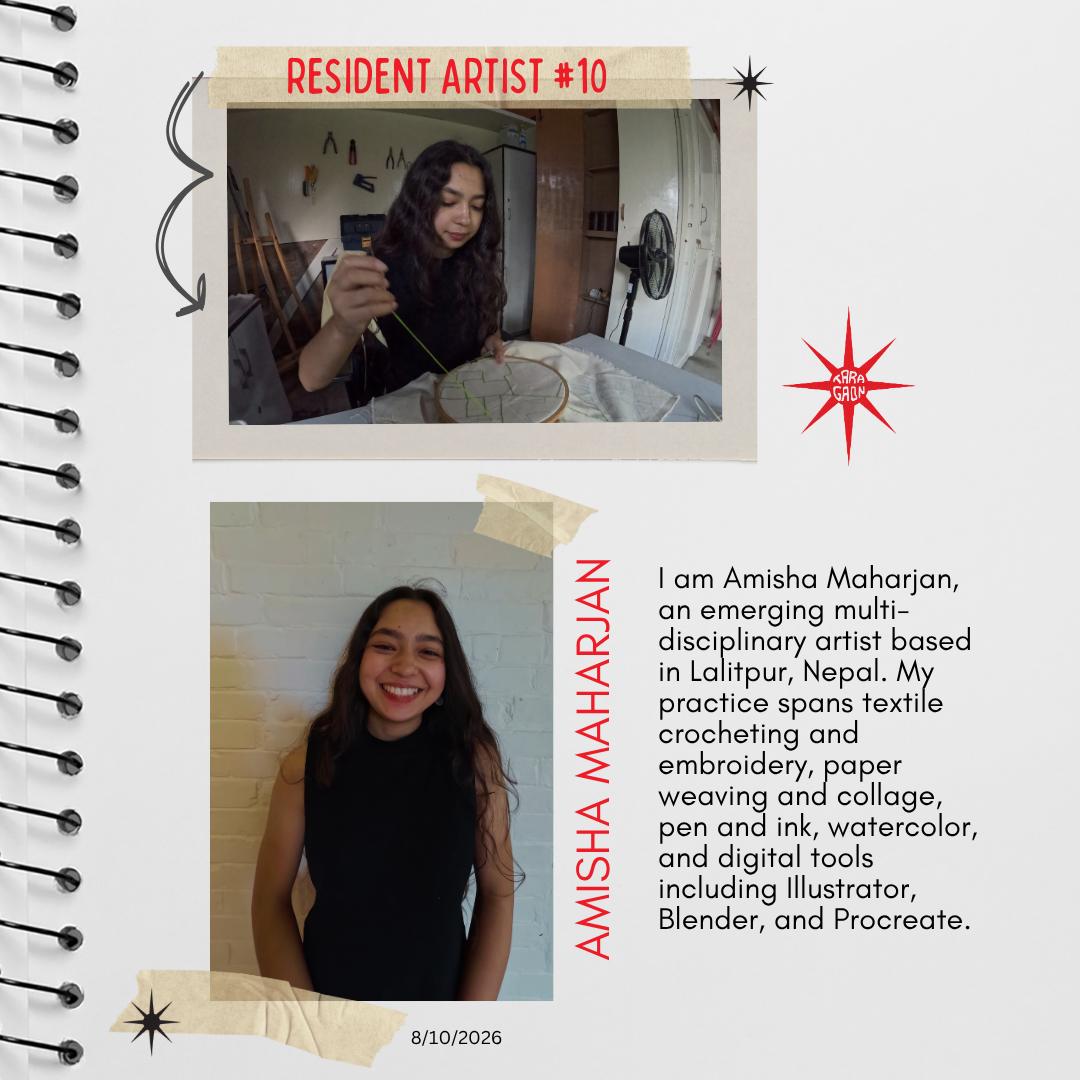
I am Amisha Maharjan, an emerging multi-disciplinary artist based in Lalitpur, Nepal. My practice spans textile crocheting and embroidery, paper weaving and collage, pen and ink, watercolor, and digital tools including Illustrator, Blender, and Procreate.

Resident Artist #10

Amisha Maharjan

“My artistic practice is process-based and material-driven. I have worked with a range of mediums such as installation, textile, screen-printing, anthotype, video documentation and text-based works where I often choose the medium based on the idea I want to express. Experimentation plays an important role in my practice, where I allow materials and processes to guide the outcome. The themes in my work revolve around space, environment and human behavior. I am interested in how people interact with their surroundings, often in ways they are not fully aware of.

Recently, I have been exploring the relationship the between agricultural land, traditional knowledge, and traditional practices in my works. Coming from a community where farming was once central, I look at how urbanization and land loss have shifted this relationship. As urban expansion continues in the Kathmandu Valley, agricultural land is disappearing, and along with it, many of the practices and knowledge systems connected to that land is also disappearing. Through my work, I question what it means to continue traditional practices, when the land, materials and daily practices that sustained them are no longer part of everyday life. In the future, I hope to develop this research into a larger body of work that combines community engagement, and material experimentation. ”
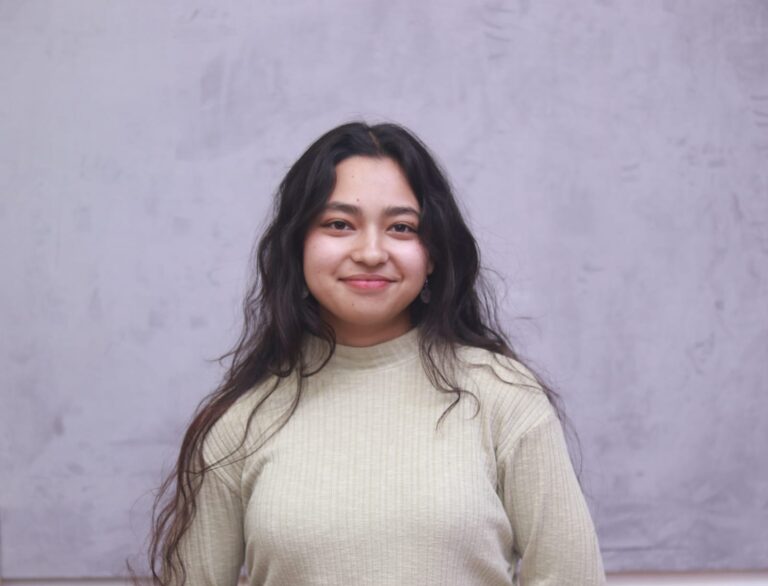
 

View the catalogue to her artwork here!

Image 5394

About the artist

I am Amisha Maharjan, an emerging multi-disciplinary artist based in Lalitpur, Nepal, working under the creative identity iami. My practice spans textile crocheting and embroidery, paper weaving and collage, pen and ink, watercolor, and digital tools including Illustrator, Blender, and Procreate.

Image 5439
Image 5438

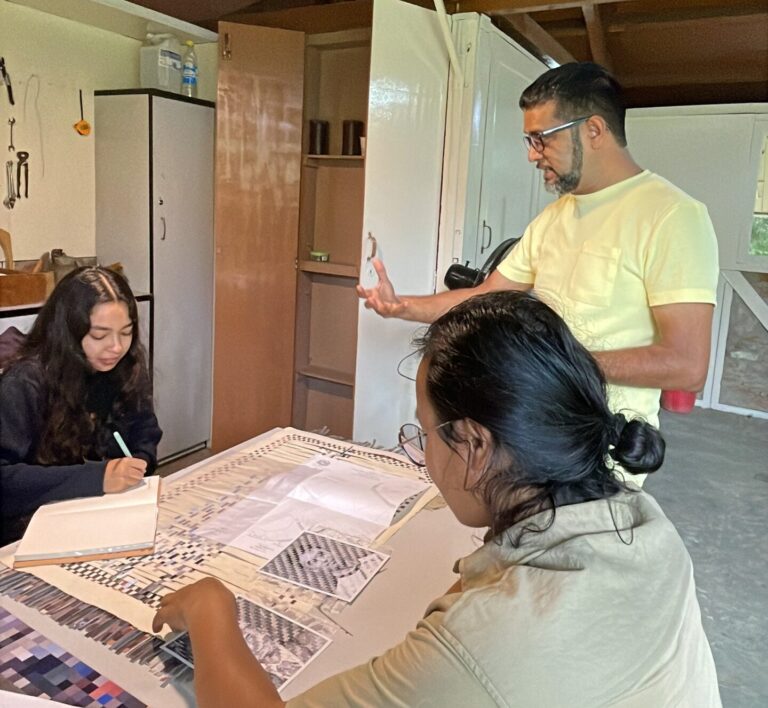
Mentorship with Pratima Thakali and Bidhyaman Tamang

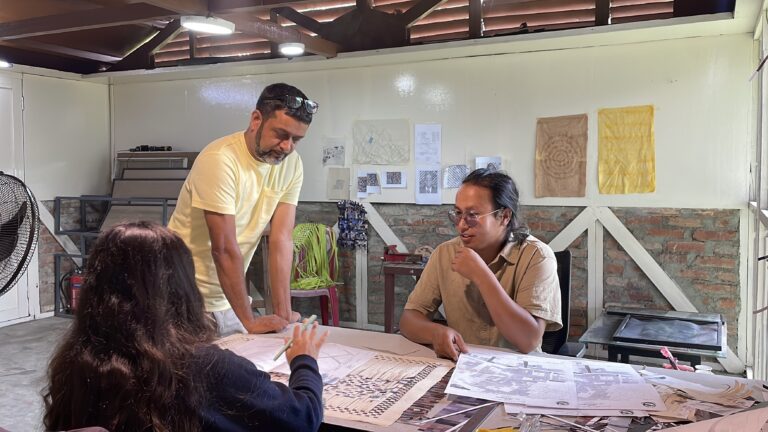
During my mentorship with Pratima Ma’am, I realized that I had become too focused on making new work and had almost forgotten to look at how my practice had developed so far. Our conversations helped me look back at my previous works and understand the connections between what I had already explored and what I was working on during the residency. She also encouraged me to continue developing some of the visual approaches I had explored previously, not by repeating the same works, but by allowing those ideas to grow in a new direction. Her feedback also helped me gain clarity around some of the questions I had about my installation and gave me more confidence to continue developing the work from there.

Similarly, my mentorship with Bidhyaman Sir helped me develop my ideas from a different perspective. Since his practice also engages with land, looking at his approach and working process helped me think more about how I was approaching my own work. Our conversations gave me a new perspective on my ideas and helped me reflect on my materials, processes, and the ways I was connecting personal experiences of land with the broader questions I was exploring.

Both mentors encouraged me to continue working with the ideas and processes I had already been developing. This helped me trust my own practice and feel more confident in the direction of my work.

Image 5454
Image 5453

Collage Workshop with Students from Balkumari School

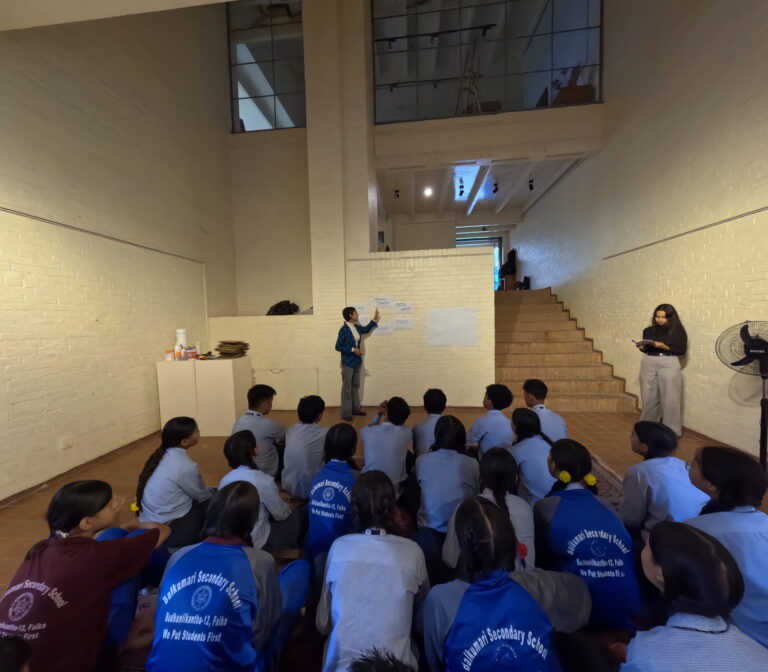
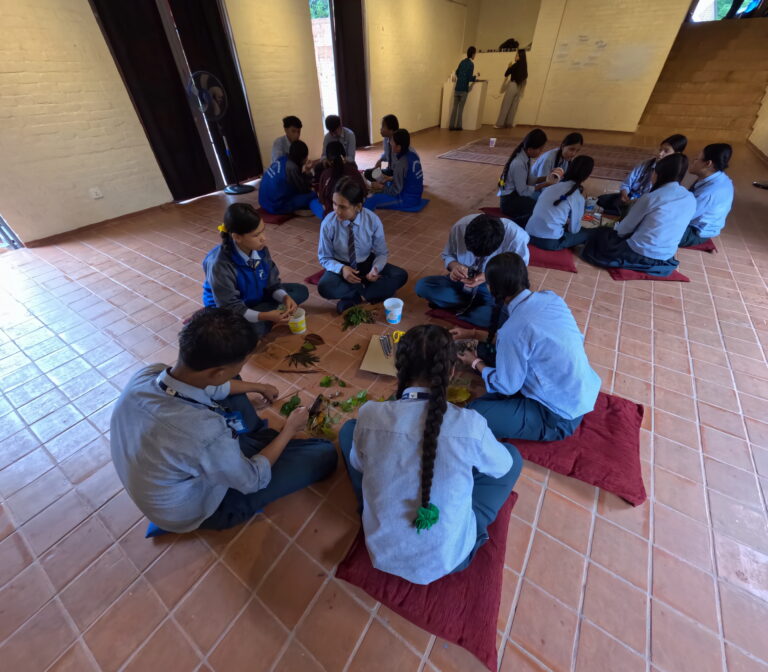
As part of the residency programming, we conducted a nature collage workshop with Grade 8 students from Balkumari School in collaboration with Canopy Nepal. The workshop encouraged students to engage with nature by collecting natural materials and using them to create collages on cardboard surfaces.

Facilitating this workshop with a larger group of students made me nervous at first. I was wondering how I would manage so many students and keep their attention throughout the workshop. However, the students were surprisingly cooperative and engaged, and they seemed to really enjoy the process. I also really enjoyed facilitating the workshop and seeing how differently each student approached the materials.

Since the workshop was part of my residency and my own work explores the relationship between land and urbanization, I initially thought about the workshop mainly through our relationship with nature. However, during the reflection and discussion with the students, they also brought up ideas around the environment and climate change. This made me realize that my current work can also subtly open up these broader questions. The workshop therefore helped me see that my exploration of land and urbanization can also connect to wider environmental concerns.