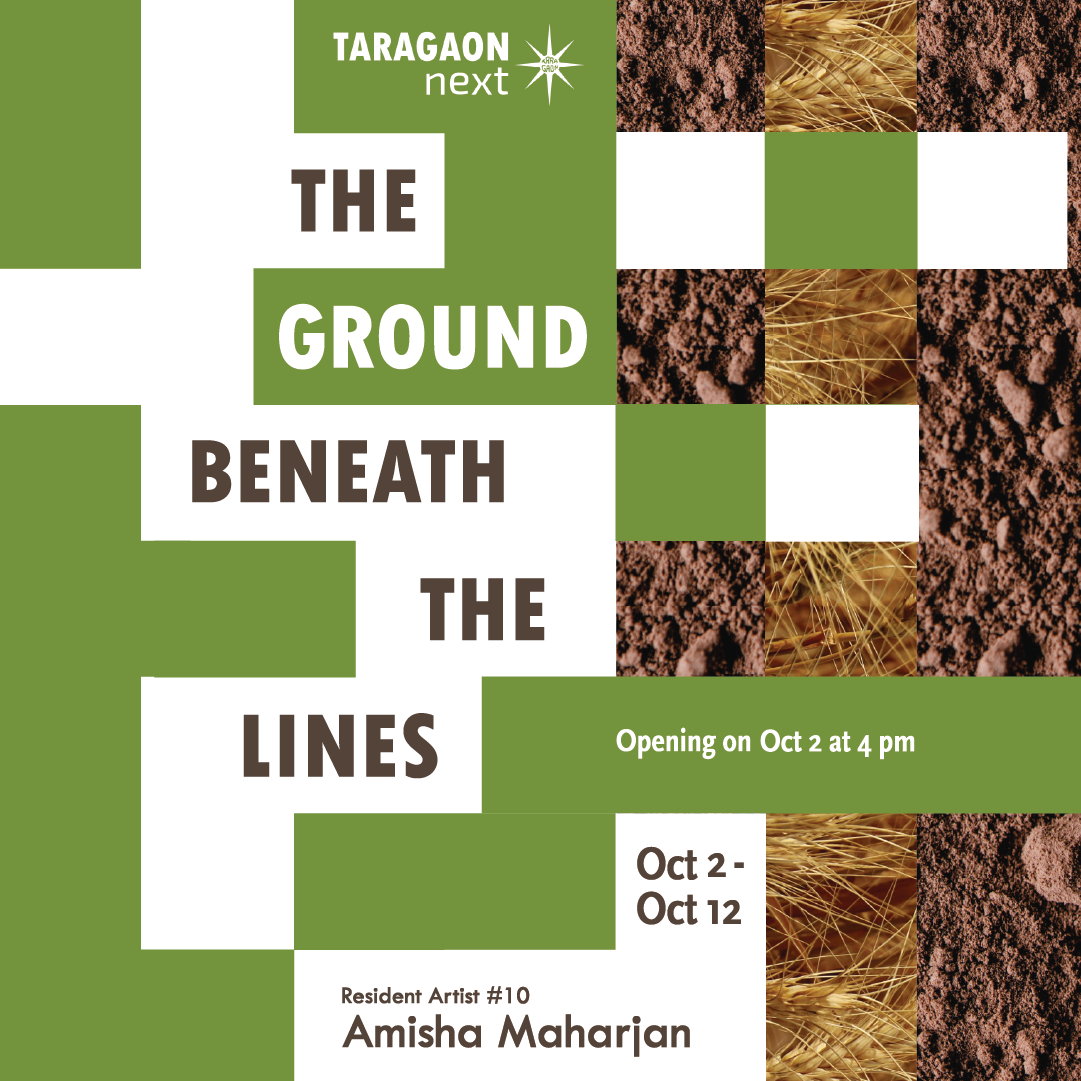
The Ground Beneath The Lines by Amisha Maharjan

Amisha Maharjan

About the Exhibition

What happens when land that was once understood as a source of sustenance, livelihood, and community becomes increasingly understood as property, commodity and a sellable asset? My work explores how the meaning, identity and usage of land have changed over the years particularly within my own community and family. I am interested in the contrast between land as a natural physical ground and the man-made systems used to control its identity including its ownership, boundaries, and divisions.

In the past, land was primarily utilized for growing food and supporting livelihood. Many traditional practices, knowledge and rituals were thus naturally connected to farming and agricultural land. It was connected to memory, work, family, community and a sense of belonging. Today, with rapid urbanization and development, land’s usage and identity have undergone vast change. It is increasingly understood through ownership, property value, boundaries, plot numbers and legal documents.

During this residency, I explored the question using land maps, legal documents, soil, seeds, aerial images, textiles and using paper weaving, installation, documentation, anthotype and other material experiments. Through this work, I am looking at the space between what land was, what it has become, and what it might become.
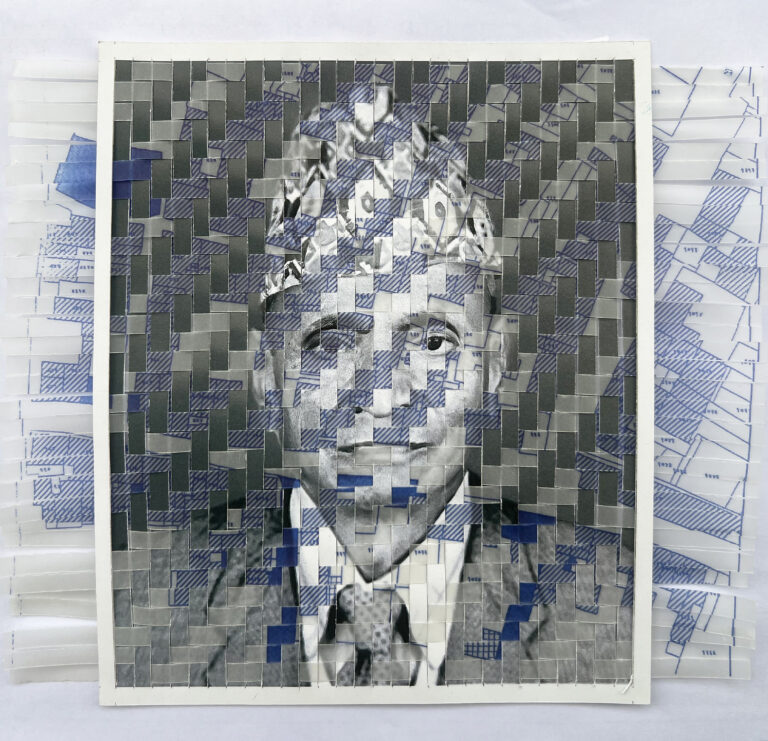
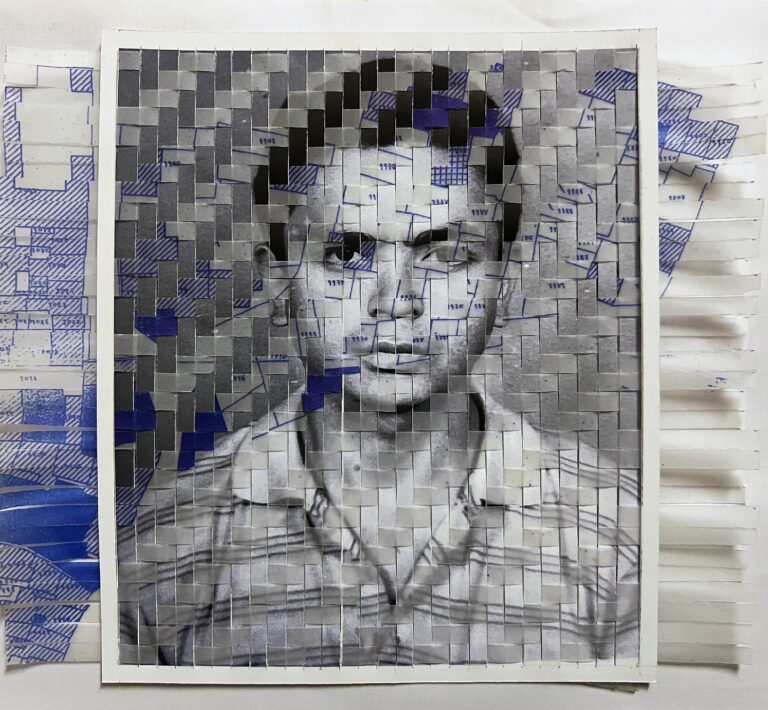
Image 5447
Image 5448
Image 5449

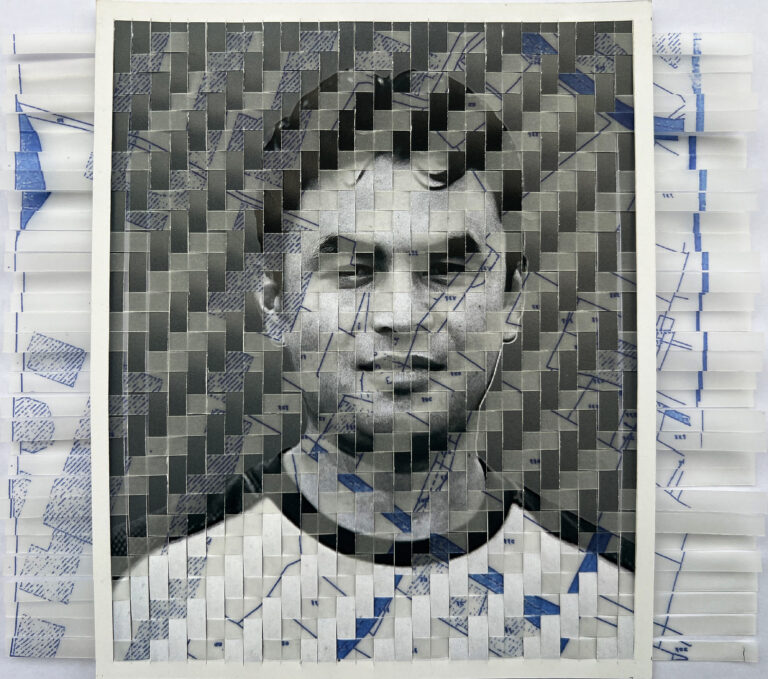
Portrait Series (3 Works)

TITLE - Inherited Ground I
MEDIUM - Paper Weaving on Paper
DIMENSION - 17.7 cm x 20.4 cm

TITLE - Inherited Ground II
MEDIUM - Paper Weaving on Paper
DIMENSION - 17.7 cm x 20.4 cm

TITLE - Inherited Ground III
MEDIUM - Paper Weaving on Paper
DIMENSION - 17.7 cm x 20.4 cm

DESCRIPTION - This work brings together portraits of my grandfather, father, and uncle, woven with land maps from three different areas connected to my family. Through these three works, I am looking at the relationship between land, family, inheritance, and ownership.
My family has a long history of farming. For earlier generations, everyday life was closely connected to agriculture. Land provided food and livelihood while also holding knowledge, farming practices, rituals, and everyday ways of life. It was closely connected to how people lived, worked, celebrated, and passed knowledge from one generation to another.
I find it interesting how this relationship with land has changed over generations. The same land that was once valued for providing food and supporting the family is now increasingly seen as property or an asset. Its value is often discussed in terms of ownership, land prices, and whether it can be sold. The portraits represent the people whose lives are connected to the land, while the maps show land as something that is inherited, divided, documented, and owned.

Image 5442
Image 5443
Image 5441
Image 5445
Image 5444

Land Map Weaving (5 Works)

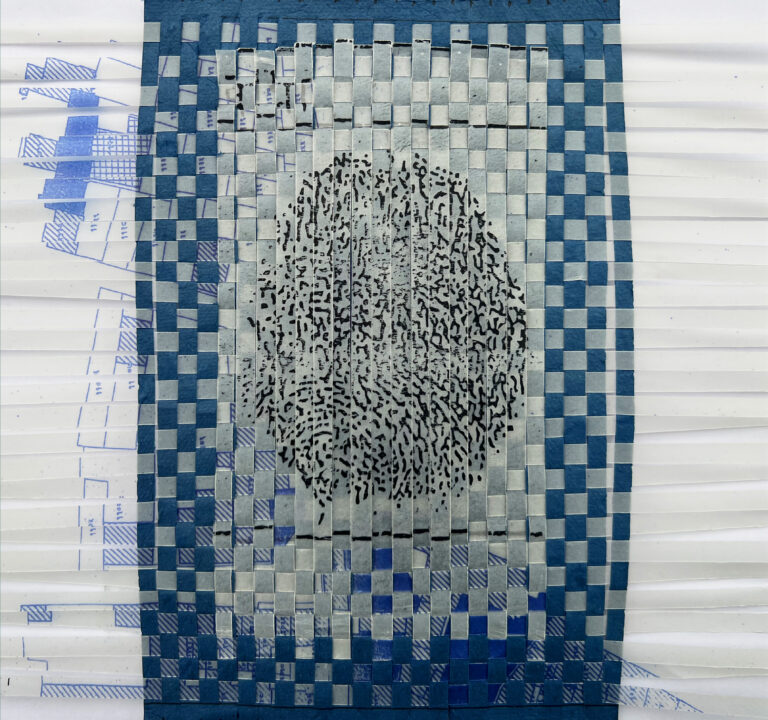
TITLE - A Plot on Paper
MEDIUM - Paper Weaving on Paper
DIMENSION - 29 cm x 18.8 cm

TITLE - Fingerprint I
MEDIUM - Paper Weaving on Paper
DIMENSION - 19 cm x 19.8 cm

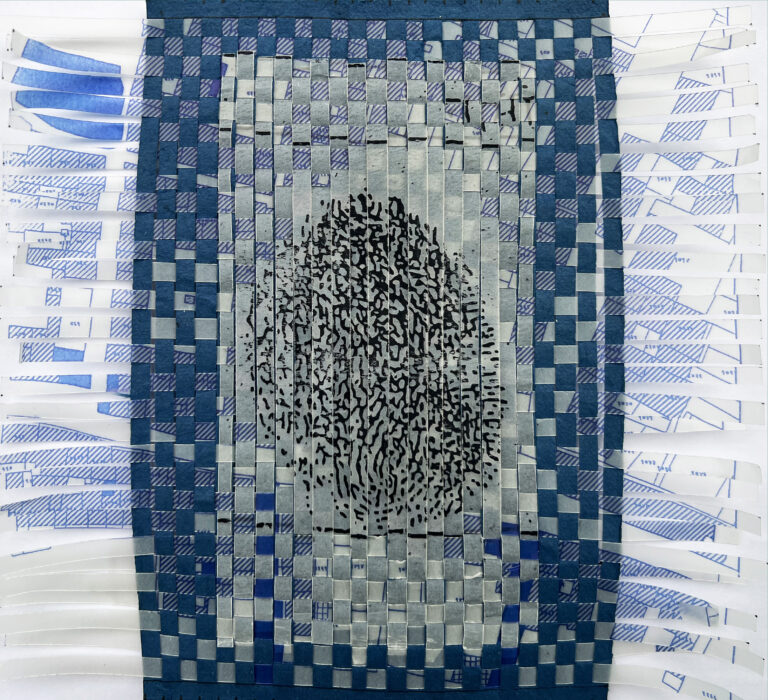
TITLE - Fingerprint II
MEDIUM - Paper Weaving on Paper
DIMENSION - 19 cm x 19.8 cm

TITLE - Bhumi Sudhar I
MEDIUM - Paper Weaving on Paper
DIMENSION - 86 cm x 64 cm

TITLE - Bhumi Sudhar II
MEDIUM - Paper Weaving on Paper
DIMENSION - 83 cm x 64 cm

DESCRIPTION
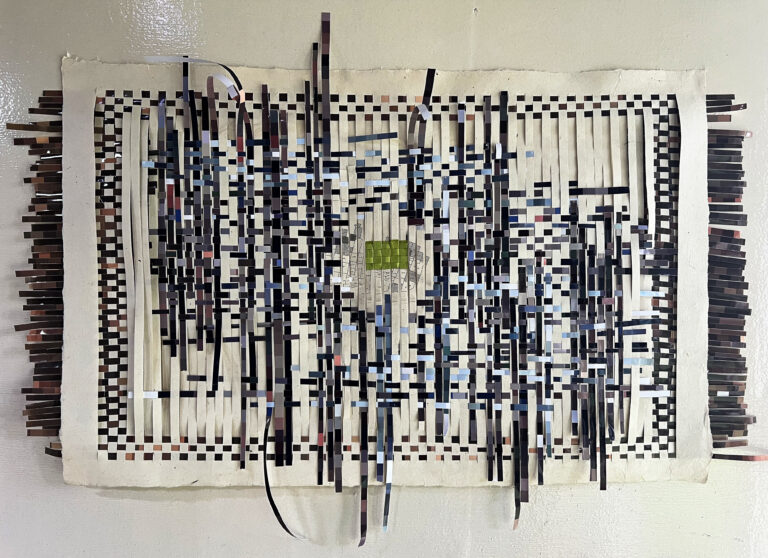
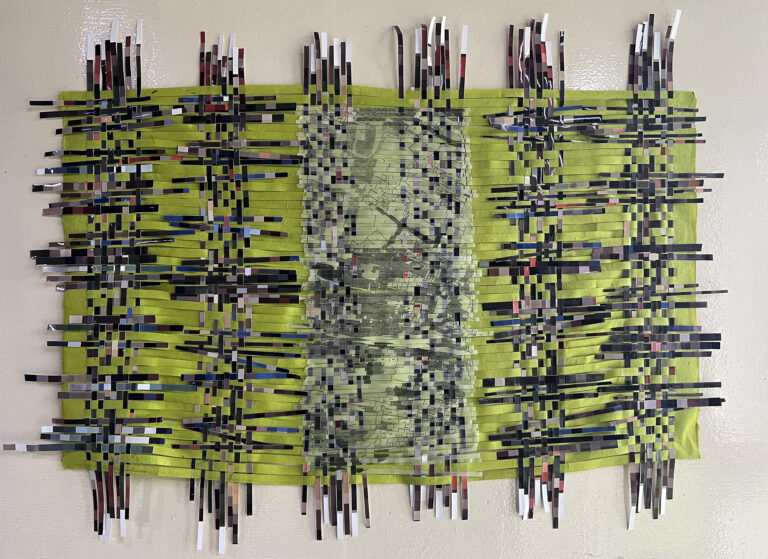
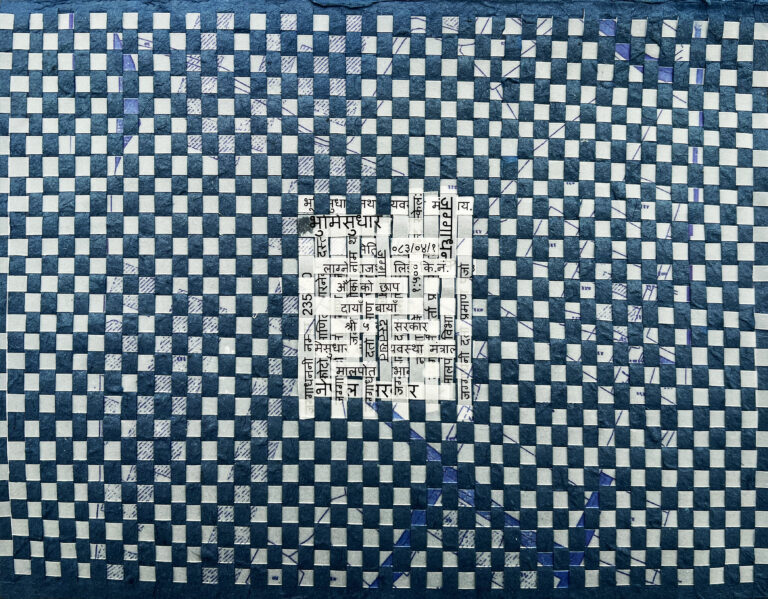
In this series, I have worked with legal land documents and maps where I have used the parts of these documents as material for paper weaving. I am interested in how the identity of land today is increasingly understood through documents, maps, measurements, plot numbers, boundaries, and records of ownership.
Today, land is measured, divided, and organized into different plots. Maps show these divisions through lines and boundaries, while legal documents give them names, numbers, and ownership. In my work, I cut these documents into strips and weave them together. By doing this, I further cut and divide the documents that are already used to divide and organize land.

Image 5440

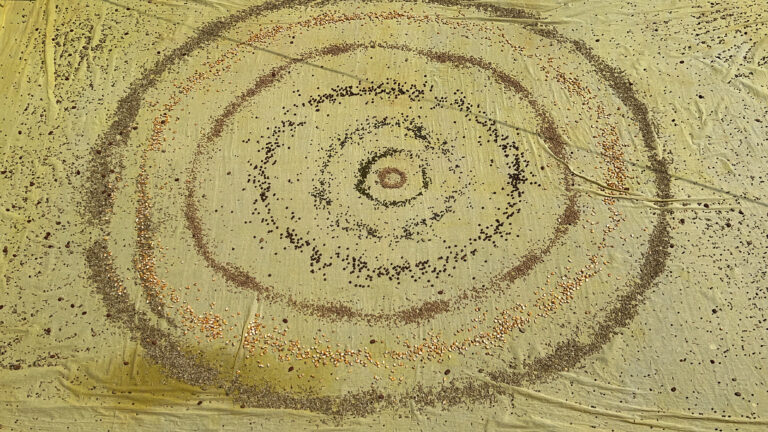
Memories of Grain

MEDIUM - Anthotype on Cotton Fabric
DIMENSION - 228.6 cm x 400 cm
DESCRIPTION - For this work, I have used seeds to represent the seasonal cycle of crops that were once grown on agricultural land in my community. The seeds connect the work to farming, food, seasonal change, and the relationship between people and land.
I have arranged the seeds in a circular form to represent the cycle of farming and a time when life in my community was closely connected to agriculture. Today, very few people in my community continue to farm, and farming is no longer a common primary occupation. As farming has declined, the knowledge, practices, and ways of life connected to agriculture have also gradually changed or disappeared.
The print was made through an anthotype process, so the image gradually fades and changes when exposed to light. I used this process to show how agricultural knowledge and practices connected to land are also disappearing over time.

A Landscape in Time

MEDIUM - Video Timelapse
DURATION - 2 Minutes 57 Seconds
DESCRIPTION - For this timelapse, I selected three locations: the area where I currently live and two places where my family once had agricultural land. Through these three locations, I wanted to show how the landscape has changed over time.
Instead of telling viewers that urbanization has changed these places, I wanted them to see the changes for themselves through the video. The timelapse shows fields being divided, open spaces being replaced by buildings and roads, and the landscape gradually becoming more urban.

How We Talk About Land

MEDIUM - Video Documentation and Animation
DURATION - 6 Minutes 38 Seconds
DESCRIPTION - This work brings together an audio conversation among my family members about land. They talk about flooding, land prices, the value of land, changes in the land, and their personal experiences. The conversation records their genuine thoughts and memories as they talk about land.
Alongside the audio, I have created a frame-by-frame drawing and animation showing agricultural life in the past. The audio and the animation create a contrast between how land is talked about today and how it was experienced in the past. The audio also becomes a direct record of how my family currently thinks and talks about land.

Land On Sale

MEDIUM - Installation
DIMENSION - Dimension Variable
DESCRIPTION - In this installation, I have used soil from a piece of my family’s land and arranged it on the gallery floor according to the actual shape of the land shown on its map. The area where the land’s kitta number appears is left without soil.
I wanted to show how land is identified through a number. The physical ground, with its history, memories, and relationships, becomes represented by a kitta number that identifies its ownership and place within the legal system.
By placing the number directly inside the shape of the land, I bring together the physical ground and the system used to measure, divide, and identify it. The empty space within the soil makes the number visible and shows how a piece of land can be reduced to an administrative identity.

Uprooted

MEDIUM - Textile Seed Pouch Installation
DIMENSION - Dimension Variable
DESCRIPTION - These small fabric pouches contain soil from my family’s agricultural land. The patterns on the fabric are made using the anthotype process and seeds connected to farming.
I used soil and seeds as materials that directly connect the work to the land, farming, and the crops that were once grown there.. By turning the anthotype fabric into small pouches, I wanted to show how these practices now have less space in our increasingly urban environment. The pouch represents how something that once had an important place in everyday life is now held within a much smaller space.

Image 5446

Natural Material Weaving

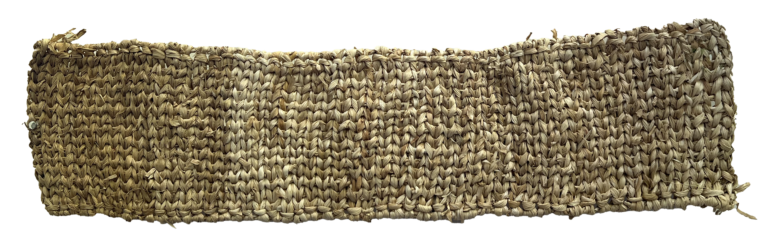
TITLE - Sukul
MEDIUM - Corn Husk Weaving
DIMENSION - 64.5 cm x 15.24 cm

TITLE - After the Harvest I
MEDIUM - Corn Husk and Paper Weaving
DIMENSION - 15.24 cm x 15.24 cm

TITLE - After the Harvest II
MEDIUM - Corn Husk and Paper Weaving
DIMENSION - 15.24 cm x 15.24 cm

TITLE - After the Harvest III
MEDIUM - Corn Husk and Paper Weaving
DIMENSION - 15.24 cm x 15.24 cm

DESCRIPTION -
In my community, people traditionally made use of materials that came from farming. Corn husks, paddy husks, wheat straw, and other parts of crops were reused to make different functional objects instead of being thrown away. This was part of the knowledge and skills that were passed down through everyday life. Today, as farming and agricultural land are gradually disappearing, these skills and ways of using natural materials are also becoming less common.
For this series, I used corn husks that my mother had kept at home. I wanted to learn the weaving skill she knew, so I asked her to make simple forms using the husks while I observed and tried to learn from her. I was not able to fully learn the technique, and the process did not become a skill that I could easily reproduce myself.

Image 5451
Image 5450

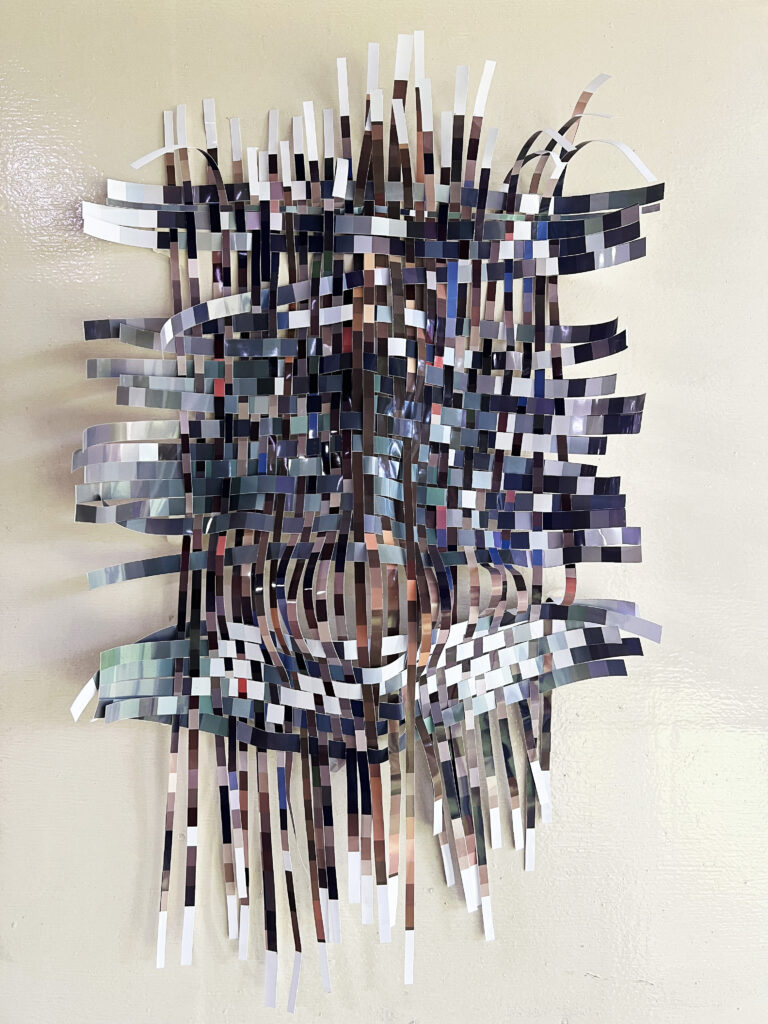
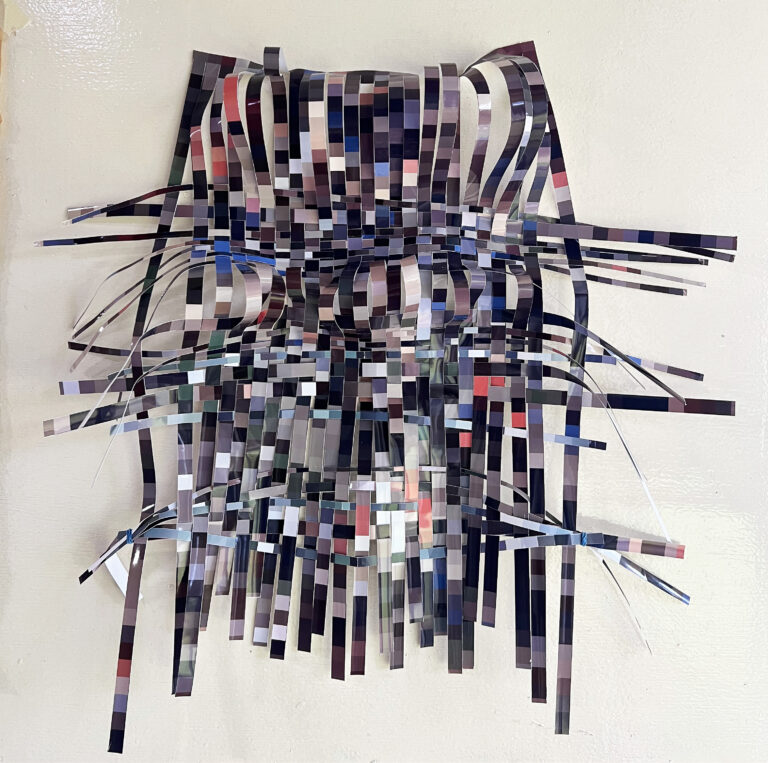
Paper Weaving

TITLE - Block by Block III
MEDIUM - Paper Weaving
DIMENSION - Dimension Variable

TITLE - Block by Block IV
MEDIUM - Paper Weaving
DIMENSION - Dimension Variable